
A complete guide to audio hire for your next event
Audio plays a bigger role in an event than most people expect. It shapes the atmosphere, supports key moments like speeches, and keeps everything running smoothly from start to finish. When it’s done well, it blends into the background. When it’s not, it’s immediately noticeable.
Before thinking about equipment, it helps to start with the layout of your event. Understanding how people will move through the space, where they’ll gather, and where key moments will take place makes it much easier to plan an audio setup that actually works.
Start with your floor plan
A clear floor plan is the foundation of any audio setup. Identify the main areas where guests will spend time, such as seating, dining areas, entrances, and any space used for entertainment or presentations. These zones will influence how sound needs to travel throughout the room.
If your event includes a dance floor or live entertainment, that area will usually become the focal point for sound. Positioning audio close to this zone helps keep the energy centred and avoids sound being lost across the space.
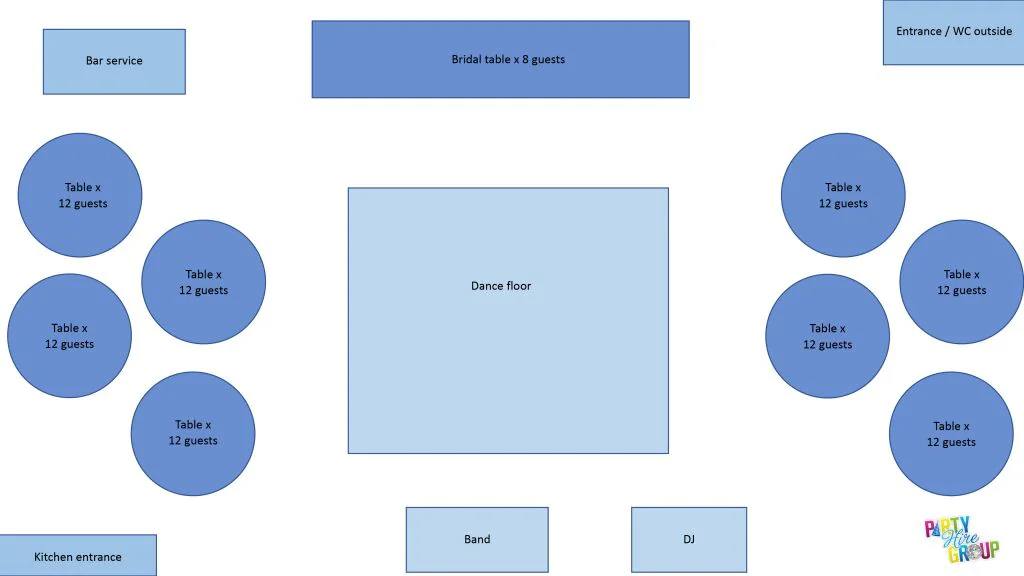
Positioning for social events
For weddings, parties, and similar gatherings, audio is often tied to music and entertainment. In these cases, placing speakers near the main activity area tends to work best. This allows sound to spread naturally without needing excessive volume.
It’s also worth avoiding placement where guests are seated directly in front of speakers, as this can be uncomfortable. A central position that allows sound to carry evenly across the room usually creates a better balance.
Positioning for corporate and conference setups
For presentations or conferences, the goal is clarity rather than atmosphere. Audio should be positioned so that everyone in the audience can hear clearly, regardless of where they are seated.
This often means placing speakers at the front of the room, aligned with where people are facing. In some cases, additional speakers may be needed to ensure even coverage across larger spaces.
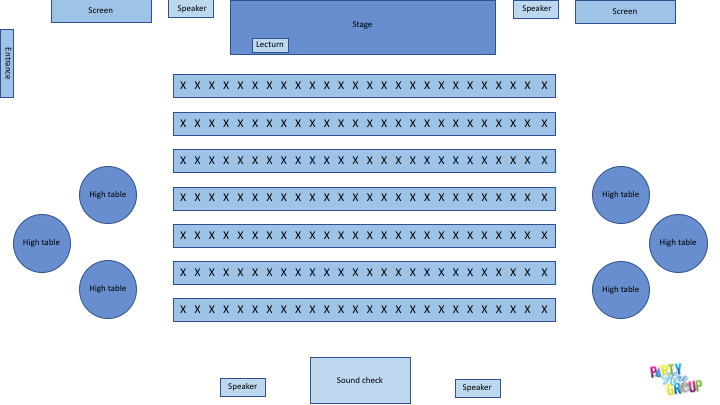
Think about how sound travels
Sound behaves differently depending on the space. Open areas allow it to travel freely, while walls, furniture, and large crowds can absorb or block it. This is why positioning matters just as much as the equipment itself.
Keeping speakers clear of obstacles and angled towards the main audience areas helps maintain consistent coverage. It’s usually better to spread sound evenly rather than relying on one loud source.
Plan for different moments in your run sheet
Most events aren’t static. There may be quieter periods, speeches, music, or transitions between spaces. Thinking about how audio will support each part of the schedule helps avoid last-minute adjustments.
For example, a setup that works well for background music may not suit speeches or presentations. Planning ahead allows you to adapt the setup without disrupting the flow of the event.
Allow time for setup and testing
One of the most important steps is also one of the simplest — testing everything before guests arrive. A quick sound check ensures that levels are balanced, connections are working properly, and there are no unexpected issues.
It’s also worth allowing enough time for setup and pack-down in your schedule. Rushing this part can lead to avoidable problems that affect the overall experience.
When the layout is considered carefully and the setup is tested in advance, audio becomes something you don’t have to think about on the day. It simply works in the background, supporting everything else that’s happening. If you want to explore what’s available for different event setups, you can view our audio range here.